
New traders faced three connected barriers: the complexity of learning trading, the risk of losing real money, and limited opportunities to learn through experience.

I chose the topic partly because I wanted to understand trading myself. Starting as a beginner gave me direct exposure to the same unfamiliar terminology and concepts the product needed to make approachable.
If access to financial tools depends on already knowing the language of the system, design has an opportunity to lower that barrier without distorting how the system actually works.
The goal was not to reinvent trading. Established exchanges already relied on recognizable patterns for charts, order types, wallets, assets and transaction states. Preserving those conventions mattered because what users learned in our MVP, TradeUp, needed to transfer to real trading platforms.
The design challenge became: retain familiar trading conventions while reducing unnecessary complexity enough for a beginner to start learning through use.
TradeUp gave beginners a safer way to practise trading with mock money against real-time market data before putting actual funds at risk.
The three problems shaped the product around three connected parts of the learning experience:

Rather than replacing established exchange behaviours, TradeUp simplified the surrounding experience and focused the product on the features most useful for learning.
We tested the product with five participants across eight core tasks, including both people with some exchange experience and complete beginners.
Because we deliberately retained recognizable trading conventions while reducing unnecessary complexity, the familiar structure generally helped participants move through the product. The more important issue surfaced when the interface relied on trading knowledge they did not yet have.
Familiarity helped navigation, but it could not compensate for missing domain knowledge.
That distinction helped us separate interface problems from a deeper issue: conventional trading experiences already assume knowledge that beginners may not have.

1 The conceptual gap: trading knowledge was still missing
The strongest barrier was not always the interface itself. Participants could reach the right part of the product and still be unable to act because they did not understand the underlying trading concept.
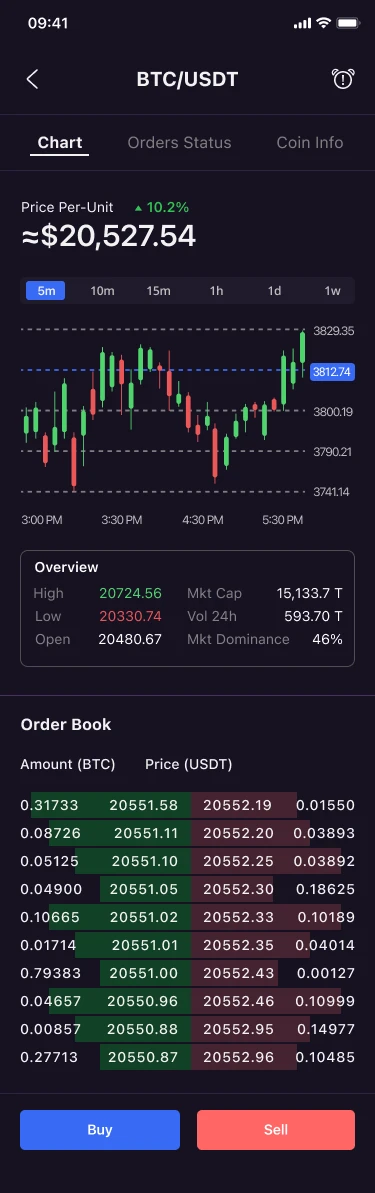
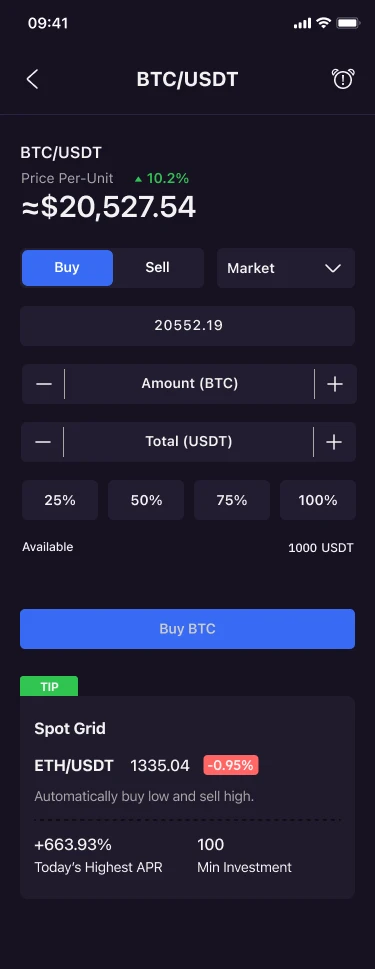
Users did not understand why changing a chart timeframe mattered, avoided the order-type control because terms such as Market and Limit were unfamiliar, and did not know how an order book should influence a trading decision.
One participant summarized the problem clearly:
“I noticed that dropdown, but I didn’t even know what market order and limit order meant, so I didn’t consider selecting it.”
This was a conceptual knowledge problem. Improving individual controls alone would not teach users how these concepts worked or why they mattered. It pointed toward a need to build foundational understanding alongside the trading experience.

2 The communication gap: some information was not explicit enough
Testing also revealed a separate set of interface communication problems. In these cases, users did not need to learn a new trading concept; the interface simply needed to make an existing action or piece of information clearer.
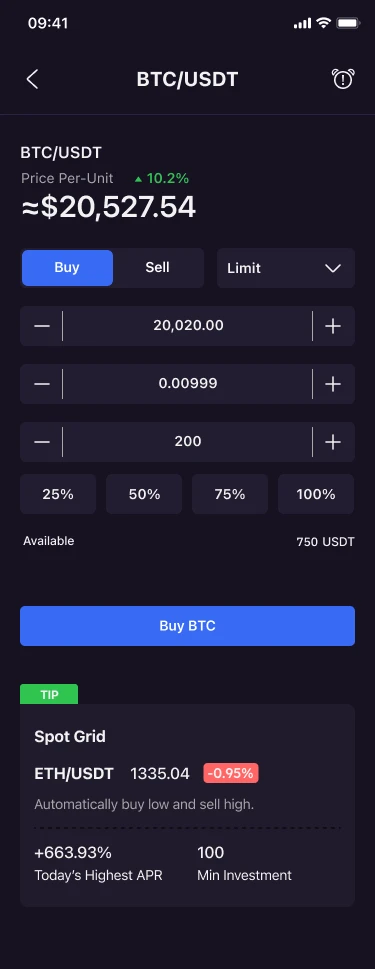
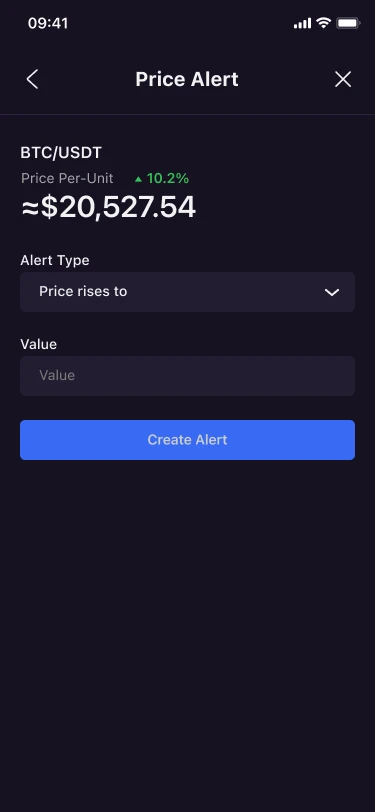
Users could overlook how much money was available before placing a trade, became unsure whether values in the buy and sell fields represented BTC or USDT, and struggled to recognize the control for creating a price alert.
These findings could be addressed within the existing trading patterns through more visible balances, persistent units, clearer labeling and stronger discoverability.
3 Users valued support that helped them build understanding
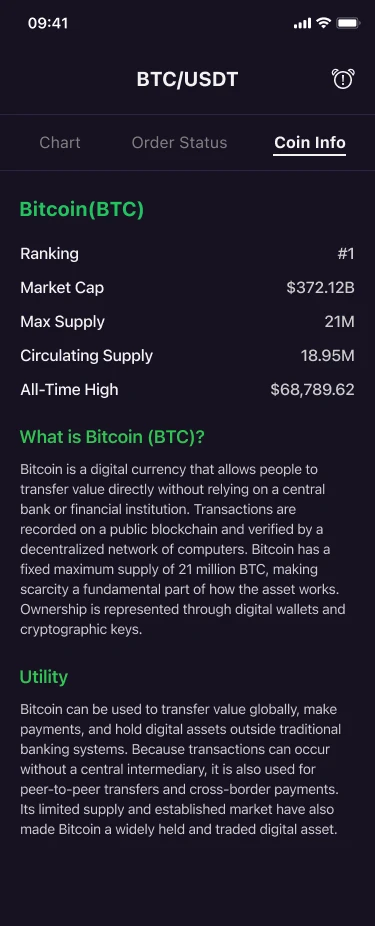
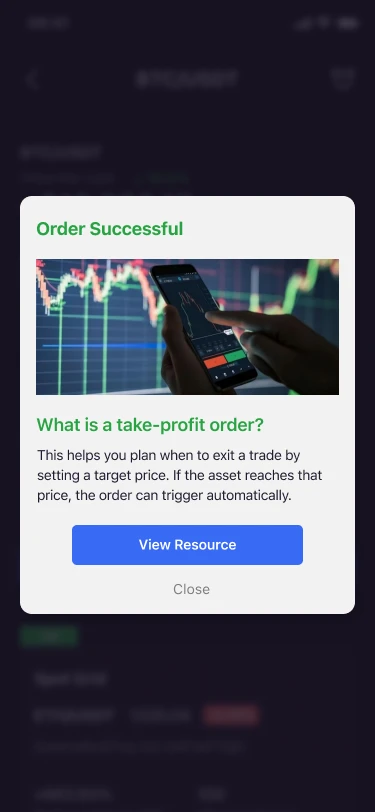
Participants consistently valued the parts of TradeUp that helped explain the domain, particularly coin information and educational resources. They also described relying on people they knew or trusted with trading experience when learning outside the product.
At the time, this led our team toward onboarding, stronger foundational resources and knowledge-sharing as the most immediate ways to support beginners.
The larger finding was more important:
Rather than documenting every workflow in TradeUp, this case focuses on the first complete trading cycle. It concentrated many of the strongest usability findings and showed where a familiar interface could still depend on knowledge a beginner had not yet built.
Find an Asset
The journey began with finding an asset to explore. The market experience used familiar exchange patterns such as coin lists, price changes and market movement so users could orient themselves without first learning a new navigation model.

Testing showed that this familiarity generally helped users move through the product. At this stage, the challenge was less about understanding the interface and more about getting users to the information they would need before making a trading decision.
Understand the Asset
Selecting BTC opened a more detailed view of its current price, chart and market information before the user decided whether to trade.
This was where the earlier conceptual gap began to surface. Users could reach the chart and order book, but some did not understand what the information represented or why it mattered to a trading decision.

Choose the Order
From the asset detail, users could choose to buy or sell and select between Market, Limit and Stop-Limit orders. This was one of the clearest conceptual breakpoints in the journey: users could find the control, but not always understand why they would choose one order type over another.

Place the Trade
Once an order type was selected, users entered the amount they wanted to trade and could use a percentage of their available balance.
Here, testing surfaced a different kind of problem. Users could complete the interaction, but the way the inputs were presented caused confusion about what they were entering and how the values related to one another.
Unlike the earlier conceptual gap, this was an interface communication problem.

Track the Trade
After an order was placed, users needed to understand what happened next: whether the order was still active or had been filled, where the purchased asset appeared, and how the transaction related to their portfolio.
Participants with previous exchange experience generally understood this model more quickly. Beginners were less certain about the relationship between orders, wallet assets and trade history, even when they could understand the information once they reached the relevant screen.
